Our Commitment
A family project, local and ethical.
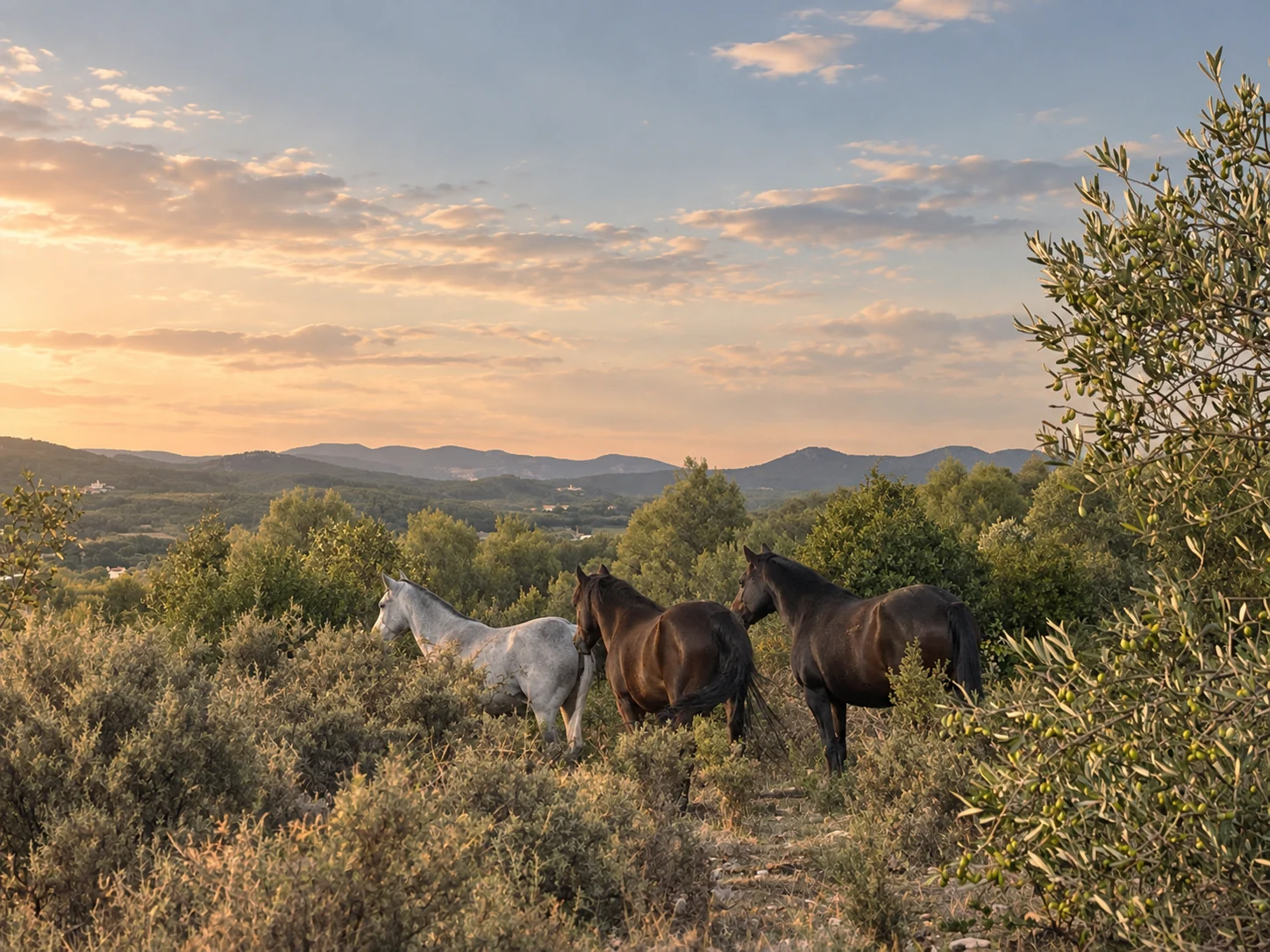
Of the five hundred olive trees on the estate, we are bringing around fifty back into production through restorative pruning that respects each tree and the vegetation around it. The work is immense. The horses’ manure is composted and returned to the soil. The results are immediate: the olive trees are productive and their fruit has exceptional potential.
Fortunately, the grove is made up of Picholine trees, whose oil is the richest in phenolic compounds among French varieties.
By following the exacting methods of cultivation, harvesting, milling and storage to which we devote all our efforts, our olives produce a high-quality oil, confirmed by chemical analyses carried out each year.
The soil
and trees
We enrich the soil without tilling it, regularly adding composted manure from our seven horses. This encourages a soil microbiome rich in bacteria and mycorrhizal fungi. We add no fertiliser and use no insecticides. We choose to maintain plant cover to feed bacteria and symbiotic fungi continuously, strengthening the soil’s resistance to drought and limiting erosion.
Lavender, thyme, winter savory and rosemary preserved around the olive trees contribute to the oil’s aromatic complexity and attract a valuable community of beneficial organisms that help regulate pests.
The clay-limestone soil provides a precious water reserve during periods of drought. The clay helps retain minerals which, together with the limestone, make the most of the organic matter added. Nourished in this way, the trees produce healthy olives that, once pressed, yield a fresh fruit juice with excellent health benefits.
The harvest
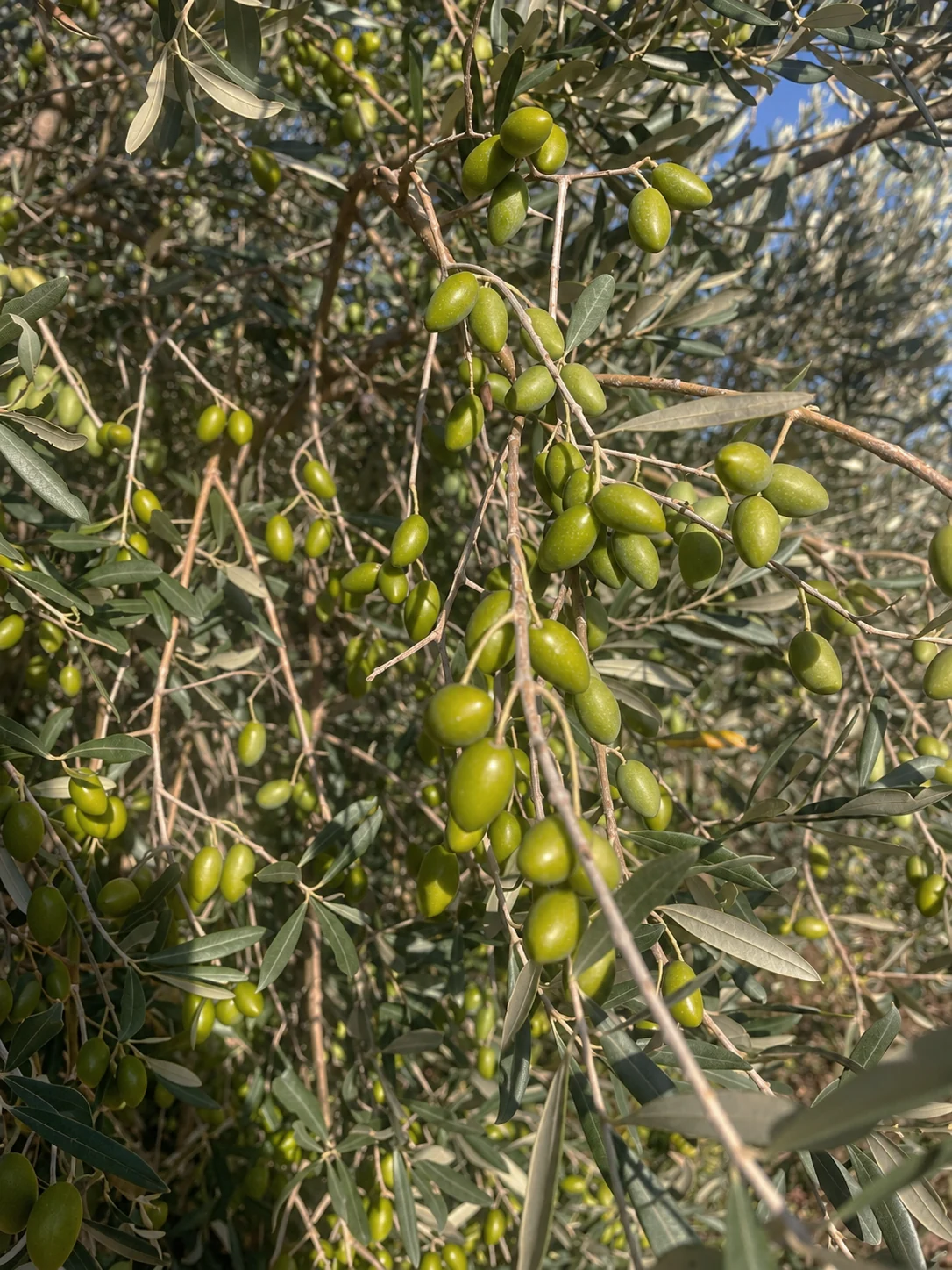
The ripeness of the olives is one of the key factors in obtaining a high-quality fruit juice with freshness and aromatic complexity. Our decision to harvest early is guided by this requirement. We favour quality over quantity. The olive is a remarkable natural bioreactor, simultaneously producing triglycerides and more than 200 different substances, including vitamin E and valuable phenolic compounds.
As soon as an olive is picked, fermentation and oxidation begin to degrade the fruit. A race against time then begins: the interval between harvesting and extracting the oil must be as short as possible, while handling that accelerates deterioration must be kept to a minimum.
We harvest exclusively by hand. Each olive is carefully selected and gently placed in small baskets. This method also allows us to avoid mechanical leaf removal and the jolting it causes.
The extraction
process
To ensure optimal freshness, we take our freshly picked olives directly to an organically certified mill, where they are immediately crushed and malaxed under the attentive supervision of Sandrine Del Piano, producer and founder of Maison aeterna.
The paste is worked precisely at a controlled temperature to extract the oil while preserving its aromas, phenolic compounds and vitamins, ensuring outstanding sensory and nutritional quality.